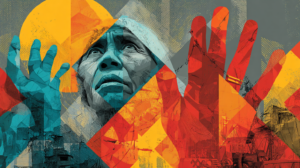
The recognition of women’s rights in Latin America was not a single milestone but a slow, uneven accumulation of laws stretched across the entire twentieth century that remains open today. Before any woman could vote, some countries already allowed her to manage her own property. After the vote was secured across the region, in 1961, it still took decades for married women to stop being under their husbands’ legal guardianship, or for abortion to stop being a crime in most countries. That long sequence, with rights arriving at different moments and speeds depending on the country, is what international bodies now summarise under the concept of women’s autonomy. It is also the backdrop against which today’s tradwife phenomenon on social media should be read.
Citizenship arrived in distinct waves, never on a single date
Before any Colombian woman could vote, she could already, at least on paper, manage her own property. The 1922 reform recognised a married woman’s right to handle her assets without her husband’s authorisation, and in 1933 access to higher education formally opened on the same terms as for men. The vote would arrive twenty-one years later. The pattern repeats across much of the region, property or educational rights usually arrived before full political citizenship.
The first woman to vote in Latin America did not do so under a protecting law but through a legal gap, and her case was individual and short-lived. Julieta Lanteri, an Italian-born doctor naturalised Argentine, registered in 1911 taking advantage of the fact that Buenos Aires’ municipal regulations did not specify the sex of those who could enrol, and voted that same year in a council election. The feat made headlines, but also alerted the authorities, who immediately tied the electoral roll to military service to shut the door on other women. Lanteri’s vote did not open a cycle, it was an anomaly that took thirty-six years to repeat legally in her own country.
The first time a group of women voted collectively was in Uruguay in 1927. An administrative dispute between three departments over the jurisdiction of the town of Cerro Chato was settled through a local plebiscite, and since Uruguayan law already allowed women to vote in municipal contests, dozens of women from the town cast ballots that day. Uruguay confirmed nationwide suffrage in 1932, though women only reached the polls in a general election starting in 1938. Ecuador had taken the earliest institutional step, in 1924, when the physician Matilde Hidalgo, from Loja, got the Council of State to let her vote, a ruling turned into constitutional law in 1929, the first in the region to explicitly recognise women’s political citizenship.
Chile recognised women’s political citizenship in 1931 and extended suffrage to municipal elections in 1934, but took fifteen more years to let them vote for president. That lag is not explained, as is often assumed, by resistance from Catholic and conservative sectors, which according to Chilean historiography were among the first to push for the extension of the vote. The brake came from anticlerical and left-wing parties, who feared the new female electorate would favour conservatism.
Argentina recognised full suffrage in 1947, with Law 13,010 driven by Juan Domingo Perón’s government and actively promoted by Eva Perón. Colombia came later, in 1954, under General Gustavo Rojas Pinilla, following a National Constituent Assembly session where the reform passed with sixty votes in favour and none against, after opposing sectors walked out of the chamber trying to break quorum.
The regional cycle closed in 1961, when Paraguay and El Salvador wrote women’s suffrage into their constitutions, thirty-two years after Ecuador had opened the way.
Those dates do not tell the whole story. Colombia’s 1945 constitutional reform had already granted women citizenship, but explicitly denied them the vote and the right to be elected, a formula that left thousands of Colombian women with full nationality and zero political participation for nine more years. Behind that delay were organisations such as the Women’s Union of Colombia and figures such as Esmeralda Arboleda and Josefina Valencia, who carried the debate into Congress from opposing political benches.
The vote did not close the cycle, it was merely one stretch of it. In 1948, the Ninth International Conference of American States, meeting in Bogotá, adopted the Inter-American Convention on the Granting of Civil Rights to Women, a treaty seeking to harmonise the legal capacity of married women. Even so, full civil capacity, the right to act before the law without a husband’s permission to manage property or sign contracts, took decades to arrive country by country. Uruguay recognised it in 1946, Brazil in 1962, Argentina in 1968 and Chile only in 1989, already within the democratic transition that followed Pinochet.
The most recent layer is that of reproductive rights, and its timeline is just as uneven. Cuba decriminalised abortion in 1961, Uruguay did so only in 2012, Argentina in 2020 after the marea verde movement, and Colombia in 2022, when the Constitutional Court decriminalised it up to the twenty-fourth week through ruling C-055. Mexico reached federal recognition only in 2023. Each date amounts, in practice, to a different citizenship depending on the country where a woman was born.
The law exists, but autonomy does not reach everyone equally
That mosaic resolved only part of what today falls under three distinct international legal frameworks. Since 1979, the UN Convention on the Elimination of All Forms of Discrimination against Women obliges ratifying states, most of the region among them, to guarantee equality before the law. Since 1994, the Convention of Belém do Pará, signed by thirty-two Latin American and Caribbean countries, recognised for the first time worldwide that violence against women is a punishable human rights violation. And for four decades, the Regional Conferences on Women, coordinated by ECLAC, have tracked what they call women’s autonomy, across three dimensions, physical, economic and decision-making.
The Regional Gender Agenda, agreed by the region’s governments at the Regional Conference on Women held in Mexico City in August 2025, translated those commitments into sixty-eight measurable targets for 2030. The latest joint report from ECLAC and UN Women on those indicators, presented in April 2025 at the Latin America and Caribbean Forum for Sustainable Development, found the sharpest setbacks concentrated in access to health services, decent employment, protection from violence and decision-making spaces, and that only 13 per cent of countries in the region have gender equality monitoring systems with their own budget allocation.
Only 13 of the 68 targets analysed in the Regional Gender Agenda for Latin America and the Caribbean, 19.1 per cent, show a pace and trend adequate to be met by 2030, according to the joint ECLAC and UN Women report presented in 2025.
The gap concentrates unevenly across countries and among women of different social standing. Time-use surveys systematised by ECLAC and UN Women show unpaid domestic work falls disproportionately on women, ranging from just over four hours daily in Argentina to more than seven in Guatemala, while men rarely exceed two hours. That burden largely explains why women with children have, according to the ILO, barely a 54 per cent chance of finding paid employment, against 88 per cent among men with children.
Colombia reflects that pattern with its own nuances. The country now recognises rights that were not even under discussion in 1954, such as the decriminalisation of abortion in 2022 or the judicial recognition of gender-based violence as its own category of legal analysis. But the exercise of those rights remains mediated by territory and social class. A rural woman in an area affected by armed conflict faces, in accessing those same rights, obstacles that do not show up in national figures, from the distance to a functioning health centre to the community stigma surrounding those who report sexual violence where social control remains in the hands of armed actors.
Tradwife, a renunciation with no exact precedent in the region
In recent months, a social media phenomenon born in the United States has begun to be discussed in Latin American outlets too. These are the so-called tradwives, women who on platforms like TikTok and Instagram display an idealised domestic life, entirely devoted to the home and to a husband presented as the sole provider. During the Women’s Leadership Summit 2026, held in the United States between 5 and 7 June, several participants publicly defended the idea of a family vote, under which the man would politically represent the whole married couple, a position that directly challenges the individual suffrage right it took American women seventy-two years of mobilisation to win.
Whether that phenomenon has an equivalent precedent in Latin American history has no simple answer. The region did know an organised, active female political conservatism. In Chile, the Women’s Section of the Conservative Party, founded in 1941, brought together Catholic women who did full-time party politics defending a traditional family model. In Colombia, the historiography of suffrage identifies resistance to traditional womanhood as one of the factors, alongside liberal electoral calculation, that delayed its recognition.
There were, in other words, women who occupied public life to defend the order that tradwives now claim on video.
What does not appear documented anywhere is an explicit, sustained, public demand from Latin American women to hand over their vote or political citizenship to the men around them. Historical opposition to suffrage, where it existed, came mostly from male political sectors fearing the electoral effect of the new voter roll, not from women demanding to give up rights they had barely begun to have. That distinguishes the tradwife phenomenon from the female conservatism the region did have, making it a genuine novelty within Latin America, not the repetition of a known pattern.
For those who study the labour market and the care economy, the answer, according to them, is more economic than ideological. Ana Güezmes, director of ECLAC’s Division for Gender Affairs, told Bloomberg Línea that for most women in the region, full-time domestic life is not a choice but, in her words, an inevitable fate that keeps many trapped in poverty, precarious or unpaid work and structural violence. Mia Perdomo, executive director of the consultancy Aequales, puts the difference more bluntly, the region’s economic conditions force women and men to work together because no average household can do without a second income, something that structurally sets Latin America apart from the markets where the trend has gone most viral.
Across the Americas, women spend an average of 268 minutes a day on unpaid care work, against 155 minutes among men, according to 2020 International Labour Organization figures.
More than half of the women outside the labour force in the region, 55 per cent according to the same sources consulted by Bloomberg Línea, say they devote themselves exclusively to unpaid domestic and care work, against barely 7 per cent of men in the same situation. That figure suggests much of what social media presents as an aesthetic and political choice was already, before it had an English name, the daily reality of millions of Latin American women with no camera and no audience. The tradwife phenomenon matters not so much for its actual size in the region, which remains marginal, but for what it reveals against that already existing structural base, and for the question it leaves open, whether the mass exposure of this content can, over time, turn into voluntary aspiration what has so far been, for most, a limitation imposed by the lack of other options.
A.B.
Sources
- El voto femenino en Colombia, la conquista que transformó la democracia
- La conquista del voto femenino, un camino que empezó antes de 1954, Centro Nacional de Memoria Histórica
- 60 años del voto de la mujer, Registraduría Nacional del Estado Civil
- Sufragio femenino en Argentina, antecedentes de Julieta Lanteri
- Día Nacional del Voto Femenino, Tribunal Contencioso Electoral de Ecuador
- Voto femenino, Memoria Chilena, Biblioteca Nacional de Chile
- Catholicism, Anticlericalism, and the Quest for Women’s Suffrage in Chile, Kellogg Institute
- Historia del voto femenino en Colombia, origen y evolución
- La sanción de la capacidad civil plena de la mujer en los países del Cono Sur, 1945-1990, Latin American Research Review
- Aborto en Cuba, primer país de la región en despenalizar
- 28S, Aborto Legal en América Latina, panorama actual y desafíos en la región, Share-Net Colombia
- México despenalizó el aborto a nivel federal en 2023
- La Agenda 2030 para el Desarrollo Sostenible y la Agenda Regional de Género, CEPAL
- CEPAL y ONU Mujeres presentan informe conjunto de indicadores de género a 2024
- Convención Interamericana para Prevenir, Sancionar y Erradicar la Violencia contra la Mujer, Convención de Belém do Pará, OEA
- Se cumplen 30 años de la Convención de Belém do Pará, Secretaría Distrital de la Mujer
- Publicaciones, Observatorio de Igualdad de Género de América Latina y el Caribe, CEPAL
- Familias latinoamericanas, organización del trabajo no remunerado y de cuidado, CEPAL
- ‘Tradwife’ o esposas tradicionales, qué tan real es la tendencia para mujeres de Latam, Bloomberg Línea
- ¿Qué es una tradwife y por qué algunas quieren renunciar al derecho al voto?, Excélsior