YEAR II  ·  No. 559  ·  TUESDAY, JUNE 16, 2026

GENEVA --:--  ·  BOGOTÁ --:--  ·  ACIDREPORT v3.5
AcidReport

EL LARGO FUEGO

DOCUMENTARY SERIES · 9 EPISODES
FIRST EPISODE OUT 30 MAY

History of the Guerrilla in Colombia

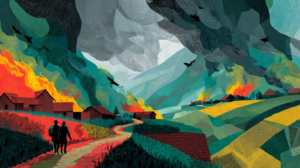
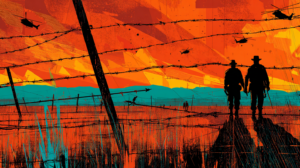
Colombia does not need another account of the guerrilla. The archives exist, the commissions too, and the bibliographies filling entire shelves that nobody reads because they are written for those who already know what they are looking for. What is missing is something different, a reading that does not apologise for having a position, that does not confuse neutrality with rigour or equidistance with honesty, and that treats the Colombian armed conflict for what it is, a logical and predictable consequence of a social order that concentrates land, captures institutions and punishes those who protest.

El largo fuego is a documentary series in nine episodes. It covers the period from the banana workers’ massacre of 1928 to the current state of the fractured peace in 2026. It is not an exhaustive chronology or an academic assessment. It is a dissection. Each episode examines a link in the chain that turned peasant grievance into armed insurgency, insurgency into criminal economy, and criminal economy into an argument for militarising everything that moves.

Episodes are published every Saturday. This space gathers the complete index and is updated with each instalment. The reader may enter at any point, but the logic of the series is cumulative, what is understood in episode nine depends on what was built in the first.

G.S.

Methodological note

The sources for this series are official documents, judicial archives, reports from international organisations, cross-referenced press records and academic publications. Where a claim could not be independently verified, it is noted as such. The series began publishing on 30 May 2026, with one episode every Saturday.
01
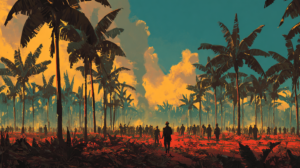
The United Fruit and the Pedagogy of Punishment

The banana strike of 1928 and the origin of a grammar of repression that the century never erased.
30 May 2026
02
Gaitán and the Broken Contract

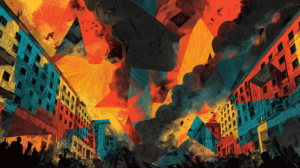
The Bogotazo of 1948 as the collapse of electoral faith and the opening of the armed path.
6 June 2026
03
La Violencia and the Birth of the FARC

From the war of colours to Marquetalia, how peasant grievance organised itself with rifles.
Coming soon · 13 June 2026
04
ELN and M-19, Two Guerrillas, Two Readings
Liberation theology against urban audacity. Two organisations, two opposite fates.
Coming soon · 20 June 2026
05
From the Revolutionary Tax to Cocaine
The financial mutation that turned the insurgency into an actor in the criminal economy.
Coming soon · 27 June 2026
06
Paramilitarism as a Form of Government
The AUC were not an accident. They were a technique of territorial administration financed by elites.
Coming soon · 4 July 2026
07
Plan Colombia and Washington’s Footprint
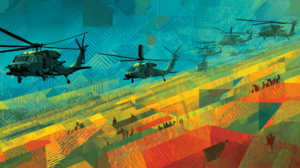
Ten billion dollars, helicopters and fumigations. What changed and what did not.
Coming soon · 11 July 2026
08
From the Caguán to the 2016 Agreement
The peace processes as a revealer of the limits of the Colombian political system.
Coming soon · 18 July 2026
09
The Fractured Peace
Dissidents, assassinated leaders, total peace in retreat. The state of the conflict in 2026.
Coming soon · 25 July 2026

Updated June 13, 2026

Gabriel Schwarb

ABOUT THE AUTHOR

Gabriel Schwarb

Gabriel Schwarb was born between borders, grew up between languages and learned to read power before the books that claimed to explain it. A Swiss-Colombian writer, founder of AcidReport and its sole permanent author — a trilingual outlet with no affiliation, no marketing and no sponsors, publishing from Switzerland in Spanish, French and English. He does not publish to please. He publishes to answer. Working in visual communication since 1997, he deliberately abandons aesthetic comfort to immerse himself in analysis, archival research and textual confrontation. He builds AcidReport as one builds an archive in times of ruin — with method, with urgency and with memory.

Writing from Switzerland, the geographical heart of global finance, about the peripheries that same finance organises is not a contradiction. It is the method. Distance does not produce neutrality; it produces perspective. His style is direct, analytical, stripped back — closer to dissection than to metaphor. His method combines rigorous source verification, archival research, OSINT and public correction of errors. For him, writing is not a literary aspiration. It is an instrument of analysis, a space for exposure and an exercise in lucidity before structures that prefer not to be named.

See all articles →

Leave a comment