The Basel Program, adopted on 31 August 1897 after three days of debate at the Stadtcasino, fits into two sentences. Its strength came not from what it said but from what it avoided saying, a calculated ambiguity meant to avoid fully committing either to the Ottoman Empire or to the Jews themselves who rejected the project. That deliberate vagueness, more than the congress itself, is the subject of this first episode, because the same procedure, saying in public only the minimum necessary to move forward without closing any door, will reappear throughout the rest of this series up to the current dispute over the label of genocide in Gaza. Understanding how that language was built in 1897 requires going back further than Theodor Herzl.
The Dreyfus Affair and Herzl’s Conversion
Theodor Herzl was born in Budapest in 1860, trained in law in Vienna, and drifted into journalism almost by default, as a columnist for the Neue Freie Presse. In 1891 the paper sent him to Paris as a correspondent, and it was there, three years later, that he covered the trial of Captain Alfred Dreyfus, a Jewish officer in the French army accused of spying for Germany on the basis of fabricated evidence. Dreyfus was convicted in December 1894 and publicly stripped of rank on 5 January 1895 in front of the Military Academy in Paris, a ceremony Herzl covered in person and during which the crowd chanted “death to the Jews”. France was, in the European imagination of the time, the country where the Revolution had settled the Jewish question through full citizenship. Watching that belief collapse in its own capital produced in Herzl something beyond journalistic outrage, a political conclusion, assimilation protected no one from a systematic resurgence of hatred.
That concern was not born in 1894. Ten years earlier, in 1883, Herzl had belonged to Albia, a German student fraternity in Vienna that practised dueling among its members, Jews included. He resigned that same year, after a memorial event for the composer Richard Wagner drew four thousand students and several speakers, one of them speaking in Albia’s own name, delivered openly antisemitic remarks. Herzl wrote a resignation letter calling that tendency a threat to liberalism, eleven years before covering the Dreyfus case.
Later historiography qualifies that heroic version of the origin. Several historians have pointed out that Herzl already carried an older concern about European antisemitism before 1894, and that he later exaggerated the weight of the Dreyfus case in his own account to give his political project a narrative of sudden conversion, more persuasive than a slow evolution. On 14 February 1896 he published in Vienna the pamphlet Der Judenstaat, barely eighty pages long, arguing that the Jewish problem was neither social nor religious but national, and that only territorial sovereignty of their own could resolve it. The text did not yet propose a specific location, it mentioned Argentina and Palestine as practically equivalent options, while acknowledging that only the latter carried the symbolic force needed to mobilise the Jewish masses of Eastern Europe. Before becoming a technique of political drafting, calculated imprecision was, for Herzl, a narrative technique applied to his own itinerary.
The Landscape Before Basel
Herzl did not invent the idea of an organised return to Palestine, he found it already under way. Since 1882, the year a wave of pogroms swept the Russian Empire after the assassination of Tsar Alexander II, tens of thousands of Jews had emigrated westward, and a minority of them, gathered in local networks known as Hovevei Zion, the lovers of Zion, had chosen to settle in Palestine rather than New York or Buenos Aires. Between 1870 and 1897, more than twenty Jewish agricultural colonies were founded in the region, financed in part by Baron Edmond de Rothschild, who funded Rishon LeZion from 1882 and, a year later, Zikhron Yaakov, named in honour of his own father, along with Rosh Pinna and Ekron, all without any political framework to protect them against Ottoman power. That same year, 1882, Leon Pinsker, a physician from Odessa, published Auto-Emancipation, a pamphlet that reached, ahead of Herzl, the same conclusion, no people without territory or strength of its own can depend on the goodwill of others to survive.
The European Jewish world of the late century was far from a homogeneous bloc waiting for a leader. In Western Europe, most Jewish communities, legally integrated since the revolutionary and Napoleonic emancipation a century earlier, kept betting on assimilation as the answer to antisemitism, and viewed the Zionist project with suspicion, even as a threat to their newly acquired national loyalty. In the east, the majority response to the same problem took a different shape, between 7 and 9 October 1897, barely weeks after Basel, thirteen delegates from five cities of the Russian Empire, Vilnius, Minsk, Warsaw, Bialystok and Vitebsk, met in secret, fearing tsarist repression, to found the Bund, a Jewish socialist party that flatly rejected the territorial path and instead proposed cultural and political autonomy within each country, under the slogan of doikayt, being here. Between these two poles, Orthodox rabbis objected on theological grounds, for them no human project could get ahead of the coming of the Messiah without committing a grave religious fault. Basel would have to find a formula able to avoid frightening any of these camps without fully committing to any of them.
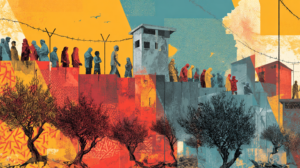
Between 1870 and 1897, more than twenty Jewish agricultural colonies were founded in Palestine under the Hovevei Zion network, before any central political organisation existed to coordinate them. (National Library of Israel)
Two Sentences, A Calculated Ambiguity
Nordau himself opened the congress on 29 August with a speech that distinguished two forms of Jewish misery. In the east, in Russia and Romania, the misery was material, pogroms, legal restrictions, poverty spread among millions of people. In the west, in France, in Germany, in Austria, the misery was moral, that of legally emancipated communities that still felt like strangers in their own nations, forced to conceal their origin in order to be accepted. Nordau, a Hungarian physician and essayist based in Paris since 1880, author of Entartung, a treatise on European cultural degeneration that had brought him international fame years earlier, brought to the Zionist project an intellectual prestige that Herzl, a journalist without academic credentials, did not possess on his own.
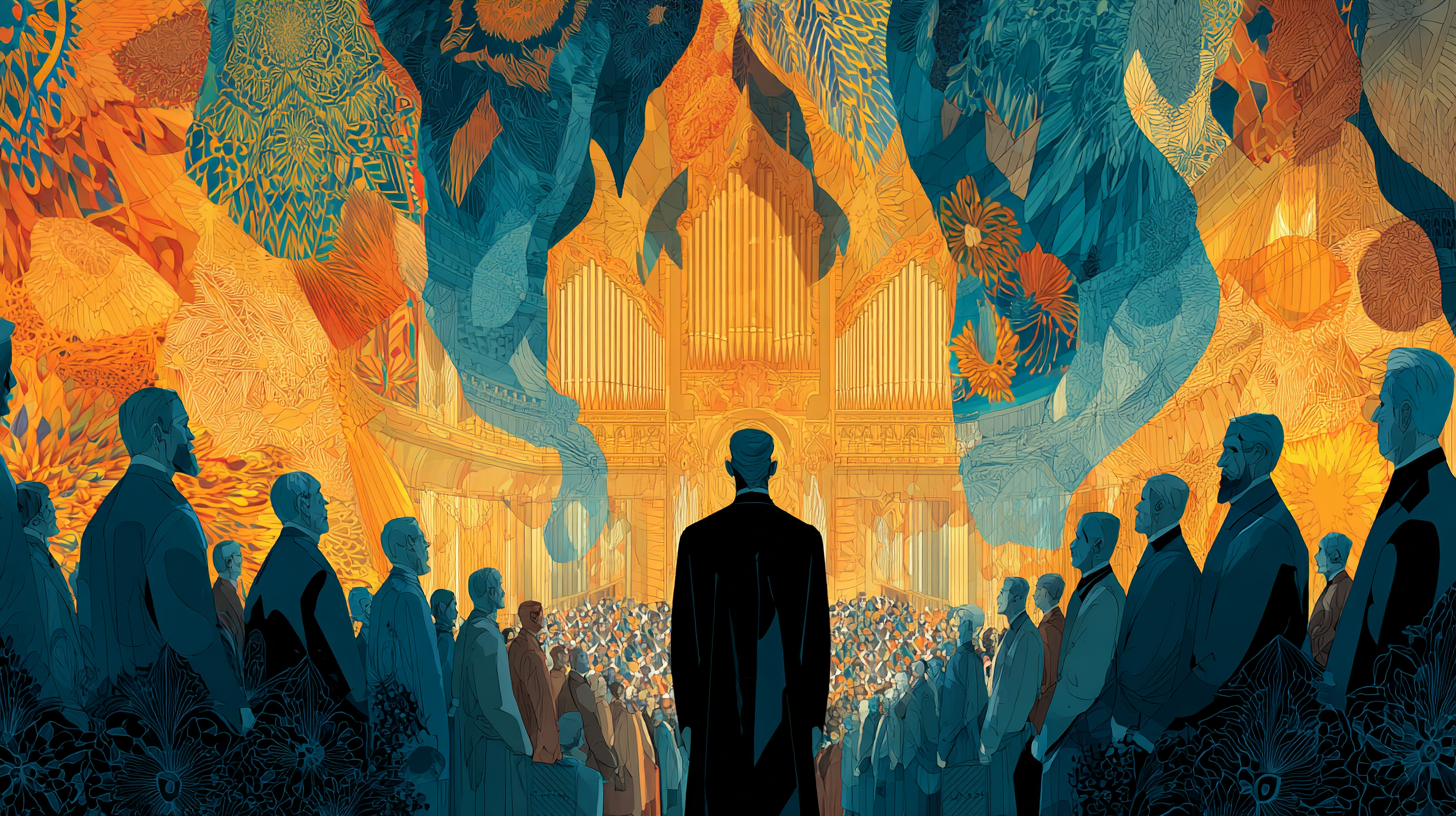
The First Zionist Congress met from 29 to 31 August 1897 at the Stadtcasino in Basel, not in Munich as originally planned. The Bavarian city was dropped after five German rabbis, two Orthodox and three Reform, published on 6 July 1897 a declaration later known as the Protestrabbiner, in which they called the Zionist project incompatible with the loyalty owed to the German fatherland. Two hundred and eight delegates from seventeen countries, along with twenty-six press correspondents, spent three days debating the drafting of a document that ended up reduced to two sentences. The committee chaired by Nordau himself proposed on 30 August the formula of a home in Eretz Israel secured by law, deliberately dropping the word “State” that Herzl had used without hesitation in Der Judenstaat, precisely so as not to antagonise the Ottoman Turkey from which Herzl hoped to obtain a formal concession, nor to frighten the more cautious Jewish circles. He was not the only one using that blunt vocabulary, Max Bodenheimer had also defended, in his own writings before the congress, the formula of a Jewish state, which makes the deliberate retreat of the Nordau committee all the more visible, stepping back from a term that until then had circulated within the movement itself without much restraint. The final formula, adopted by acclamation, was a compromise proposed by Herzl himself, a home for the Jewish people in Eretz Israel secured by public law. Herzl was elected president of the newly created World Zionist Organization. The congress also adopted a blue and white flag with a six-pointed star at its centre and made the Hatikvah the organisation’s anthem, two symbols that would outlive the political program itself. Seventeen women attended the sessions, some in their own name, others accompanying delegates, without the right to vote, a right that would only be granted to them at the following congress.
The congress did not stop at the political formula. It also approved a four-point practical program, promoting agricultural and industrial settlement of Palestine by Jewish workers, organising the whole of world Jewry into local and general institutions subject to the laws of each country, strengthening Jewish national feeling and consciousness, and taking the preparatory steps necessary to obtain the consent of governments wherever indispensable to achieving the aim of Zionism. That fourth point, deliberately vague about which governments and what consent, repeated on another scale the same drafting technique that had already dissolved the word “State” in the final formula. The congress also created a permanent institutional apparatus, the World Zionist Organization with its Action Committee and annual congress, Die Welt as the official press organ founded by Herzl himself weeks earlier in Vienna, and the so-called shekel, a minimum annual due granting voting rights at future congresses, which turned membership in the movement into something measurable, countable, subject to statistics.
A few days later, on 3 September 1897, he wrote in his diary the line that has been quoted ever since as the most honest summary of the project, “were I to sum up the Congress of Basel in one word, which I shall take care not to utter publicly, it would be this, at Basel I founded the Jewish State. If I said this today out loud, universal laughter would be the reply. In five years, perhaps, and certainly in fifty, everyone will see it.” What the Basel Program inaugurates is not merely a political goal but a method, saying in public only the minimum necessary so as not to close any door, and reserving full certainty for the private diary, for closed negotiations, for the moment when the balance of power allows it. The gap between the caution of the official text and the private certainty of the diary is not a biographical anecdote, it is the very architecture of the project.
Reactions and Silences
The most immediate reaction to the congress came neither from the Ottoman government nor from any European chancellery, but from other Jews. Beyond the Protestrabbiner, which had already forced the change of venue before the congress even began, the Centralverein deutscher Staatsbürger jüdischen Glaubens, the main German Jewish organisation defending citizenship, founded in Berlin in 1893, repudiated the project as incompatible with the full German national belonging its members had claimed for decades. The Bund, barely founded, added its own condemnation, for its leaders Zionism diverted the Jewish working class from revolutionary struggle toward a territorial fantasy with no material basis. Herzl, who in his private diary had gone so far as to call European antisemites objective allies of his cause, knew the project needed both external rejection and internal support to establish itself as a national cause.
The Alliance Israélite Universelle, founded in Paris in 1860 by Adolphe Crémieux among others, kept toward Basel a distance more calculated than hostile. Its president since 1898, Narcisse Leven, backed a path distinct from Herzl’s, the emancipation of Jews in the Ottoman Empire, North Africa and the Balkans through a network of modern schools that by the end of the century numbered over a hundred establishments. The Alliance did not condemn the Zionist project with the same severity as the Centralverein or the Bund, but neither did it embrace it, it chose to keep betting on education and legal integration within existing states, a third position facing the choice between pure assimilation and territorial sovereignty that the Basel Program posed.
Not all the criticism came from outside the movement. Asher Ginsberg, known by his pen name Ahad Ha’am, had argued since 1889 for a cultural Zionism centred on the spiritual regeneration of the Jewish people rather than the urgency of a state, and attended Basel in person, where according to later accounts he felt out of place amid the delegates’ general enthusiasm. That same year he published the essay “The First Zionist Congress”, in which he warned that the collective euphoria concealed an underlying fragility, a political movement with no territory, no army and no diplomatic recognition risked promising a liberation it could not deliver within the timeframe its own delegates expected. For Ahad Ha’am, Palestine had first to become a spiritual centre capable of regenerating Jewish culture scattered across Europe, not the immediate solution to persecution that Herzl proposed. That divergence between political Zionism and cultural Zionism, already visible at Basel, would become one of the movement’s most lasting fault lines over the following three decades.
The most decisive silence, however, was that of Sultan Abdulhamid II. The Ottoman Empire, which held formal sovereignty over Palestine, systematically refused to grant any charter or territorial concession to the World Zionist Organization in the years following the congress, and Herzl’s diplomatic efforts with the great European powers produced no concrete commitment. He met Kaiser Wilhelm II three times in 1898, on 18 October in Constantinople and on 28 October and 2 November in Jerusalem, an itinerary that began with some hope that Germany would pressure the sultan in exchange for a protectorate, and ended, at the last meeting, with no commitment at all. The program’s ambiguity did not spare the project that rejection, no text would have been enough to bend Ottoman interest in keeping Palestine under its own sovereignty, but it did spare it something else, an outright condemnation capable of closing the door for good. A program that formally demanded neither territory nor sovereignty proved harder to reject once and for all than one that had demanded them openly, and that distinction, between immediate diplomatic failure and long-term political survival, is what set the World Zionist Organization apart from so many other nationalist projects that did not survive their first rejection.
Sultan Abdulhamid II systematically rejected the requests for territorial concessions submitted by the World Zionist Organization after the Basel Congress, and no European power offered concrete diplomatic support for the project during the following decade. (Jewish Virtual Library, Encyclopaedia Britannica)
Basel resolved none of what divided the Jewish world, nor did it secure any commitment from the powers that might have guaranteed it. It left behind, instead, a method, ambiguity as an instrument of political survival, able to hold without territory, without an army and without diplomatic recognition for decades, precisely because it never offered a target precise enough to be destroyed at a single stroke. That same method, later applied to land, to citizenship and, much later, to the legal classification of violence, is the thread running through the rest of this series…
G.S.
Sources
- First Zionist Congress
- Basel Program
- Basle Program
- Protestrabbiner
- First Zionist Congress and Basel Program
- Theodor (Binyamin Ze’ev) Herzl
- 3 September 1897, At Basel I founded the Jewish State
- The Complete Diaries of Theodor Herzl (Herzl Press, 1960, ed. Raphael Patai)
- Theodor Herzl, Der Judenstaat (1896)
- Leon Pinsker, Auto-Emancipation (1882)
- Max Nordau, Entartung (1892)
- Alliance Israélite Universelle, institutional history
- Narcisse Leven, AIU presidency since 1898
- Ahad Ha’am, “The First Zionist Congress” (1897), in Ten Essays on Zionism and Judaism, trans. Leon Simon
Updated August 15, 2026