
INSTITUTIONAL DOCUMENT — ACIDREPORT
Editorial Team
Geneva — Bogotá
5members
3languages
2cities
AcidReport is a small newsroom, deliberately small. Not for lack of ambition, but because rigour demands a human scale. Every text we publish passes through at least two pairs of eyes, every claim is traceable to its source, every correction is made public. Our team brings together journalists, historians, theorists, analysts and digital communications specialists who share a single working principle: verification before speed, the archive before impact, lucidity before comfort. We operate from Geneva and Bogotá, in three languages, with no advertising and no shareholders. What we publish, we can stand behind.

Gabriel Schwarb
Founder and Editorial DirectorMorges, Switzerland
Gabriel Schwarb is the founding director and editor in chief of AcidReport. The outlet operates as a non-profit association, governed by Article 60 of the Swiss Civil Code, with no political affiliation, no advertising and no external funding.
Read biography
He was born between borders and grew up between languages, amid the collapse of official narratives, a third culture individual and Swiss-Colombian writer. He began his professional career in 1993, between Bogotá and Cartagena, in creative and multimedia production. He continued it for more than two decades as an art director and web developer, first in Paris and Dublin, later in Brussels, and finally in Montreux and Morges, once settled in Switzerland. In 2018 he made a deliberate turn toward investigative journalism. He collaborates regularly with outlets such as FAL MAG, in France. Today he devotes his main activity to AcidReport, with more than three decades of accumulated professional practice.
He founded AcidReport from a precise starting point, the conviction that Iván Duque's 2018 victory over Gustavo Petro had not been clean, a suspicion reinforced by the Ñeñe Hernández scandal revealed the following year. The wave of social mobilisation that later marked the Duque government confirmed that same certainty, that of a country whose traditional media let very little of what was actually happening come through. His initial purpose was to inform Europe of what was happening in Colombia.
The first articles were published in English, designed to make translation between languages easier. Soon after, Colombian readers interested in that same account asked for a Spanish version, a logical reaction given local coverage they considered false, and given the scarcity of voices explaining events in detail and with documented sources. That is how the outlet he now directs was born, conceived at first as an information bridge between Colombia and Europe, later widened to all of Latin America, and read today across the entire world.
He builds AcidReport the way an archive is built in a time of ruin, with method, with urgency and with memory. For him, writing is not a literary aspiration. It is a tool of rupture, a space of denunciation and an exercise in sustained lucidity.
His style is direct, analytical, stripped down, closer to dissection than to metaphor. His method combines strict source verification, archival work, OSINT (open source intelligence) and public correction of errors. He believes in the word as a political act, as a form of protection against oblivion and as a possibility of symbolic reparation for those who can no longer speak.

Ricardo Cubides
Historian
His professional work spans research on the Colombian armed conflict, primarily in the Caribbean region, and the consolidation of processes for the defence of human rights, peacebuilding and reparation for victims. He has been coordinator of the Consultoría para los Derechos Humanos y el Desplazamiento (CODHES) in the Caribbean region since 2022.
Read biography
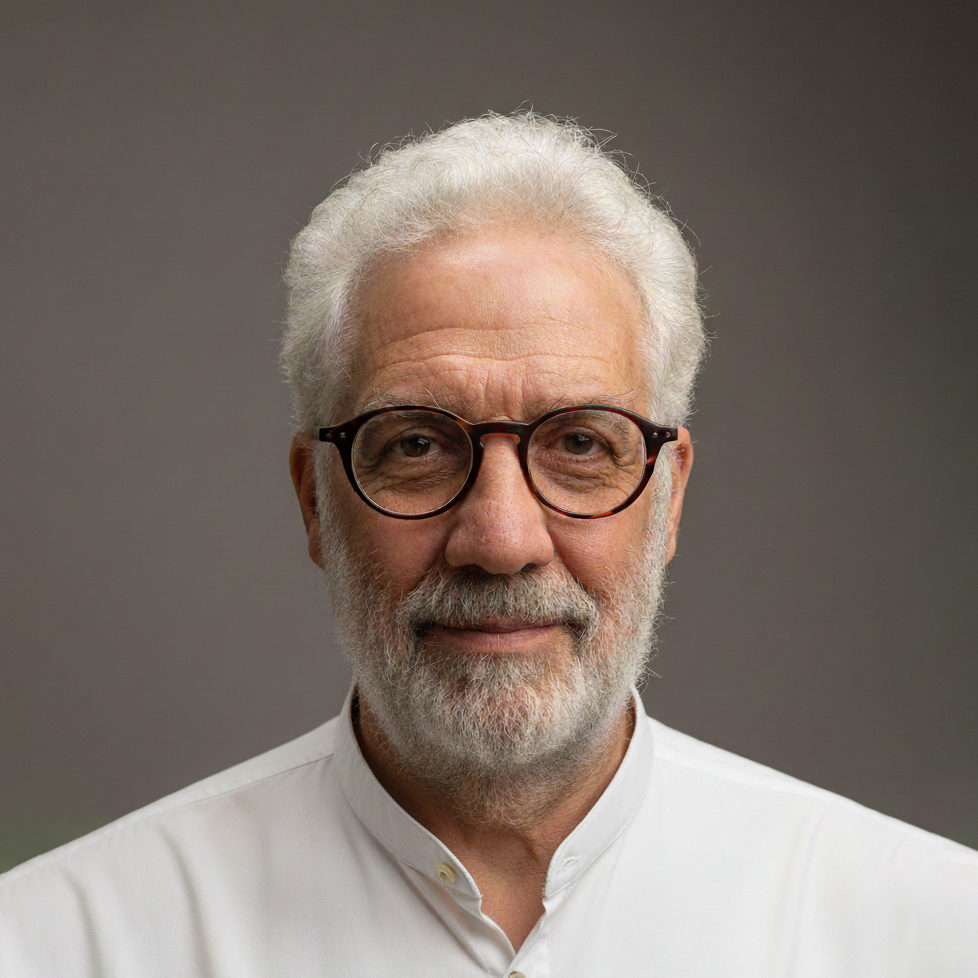
Mauricio Durán
Essayist and film theorist
An architect from the Universidad de los Andes (1986) and holder of a master's degree in philosophy from the Universidad Javeriana (2010), Mauricio Durán has practised teaching and research in the audiovisual field for more than three decades. Since the early nineties he has been a professor-researcher at the Department of Visual Arts of the Universidad Javeriana, where he has directed auteur cinema projects and trained generations of filmmakers.
Read biography
His intellectual work focuses on cinema as a machine of thought and a transformer of perception. His writing combines philosophical rigour, aesthetic experience and analysis of urban narratives, eschewing both academic formalism and impressionistic criticism. His publications include the books La Máquina Cinematográfica y el arte moderno (2009) and El Cine como máquina de pensamiento y control (2021).
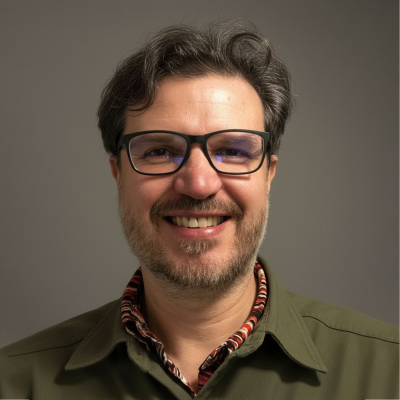
Guillermo Patiño
Music Columnist and Chronicler
Guillermo Patiño is, from Barcelona, an active memory of the nineties. Co-creator of the legendary programme Radio Paramecio and a former regular at the storied bar La Floristería, as well as a writer for the magazine Disidencia, he was part of the heart of the local alternative movement.
Read biography
He does not seek the spotlight, preferring slow conversation, consistency, and care for the scenes that sustain cultural life once the trend has passed and the market has moved on. His chronicles attend to the margins, to neighbourhood memory, to music that resists closures and gentrification. Looking back, he does not idealise; he searches for keys to keep creating here and now.

Adrianis Beltran
Social Media Manager
Adrianis Beltrán is studying Law at the Universidad del Magdalena, Colombia. Her training is focused on human rights, cultural diversity and the environment, an axis that shapes her outlook on the subjects AcidReport addresses from a global geopolitical perspective, with particular attention to Latin America.
Read biography
She is the first woman on AcidReport's editorial team, a fact that introduces a perspective hitherto absent from an outlet built predominantly by male viewpoints. This training naturally positions her in relation to the issues running through Latin America as a whole, from forced displacement and environmental justice to the struggle of women and the diverse community, through to territorial violence against indigenous peoples, with Colombia standing as one of the most documented settings, though not the only one. She also belongs to the generation that grew up immersed in the digital world, a decisive condition for the role she will take on at the helm of PILAS, the short video format through which AcidReport addresses young Colombian audiences. Her native familiarity with the codes of social media, combined with the rigour proper to her legal training, allows her to translate complex content into accessible language without sacrificing precision. This dual competency, legal and generational, defines the specific contribution she brings to the new project.
AcidReport representative in Colombia. Responsible for public relations, contact with institutional sources and the outlet’s visibility in the country.