
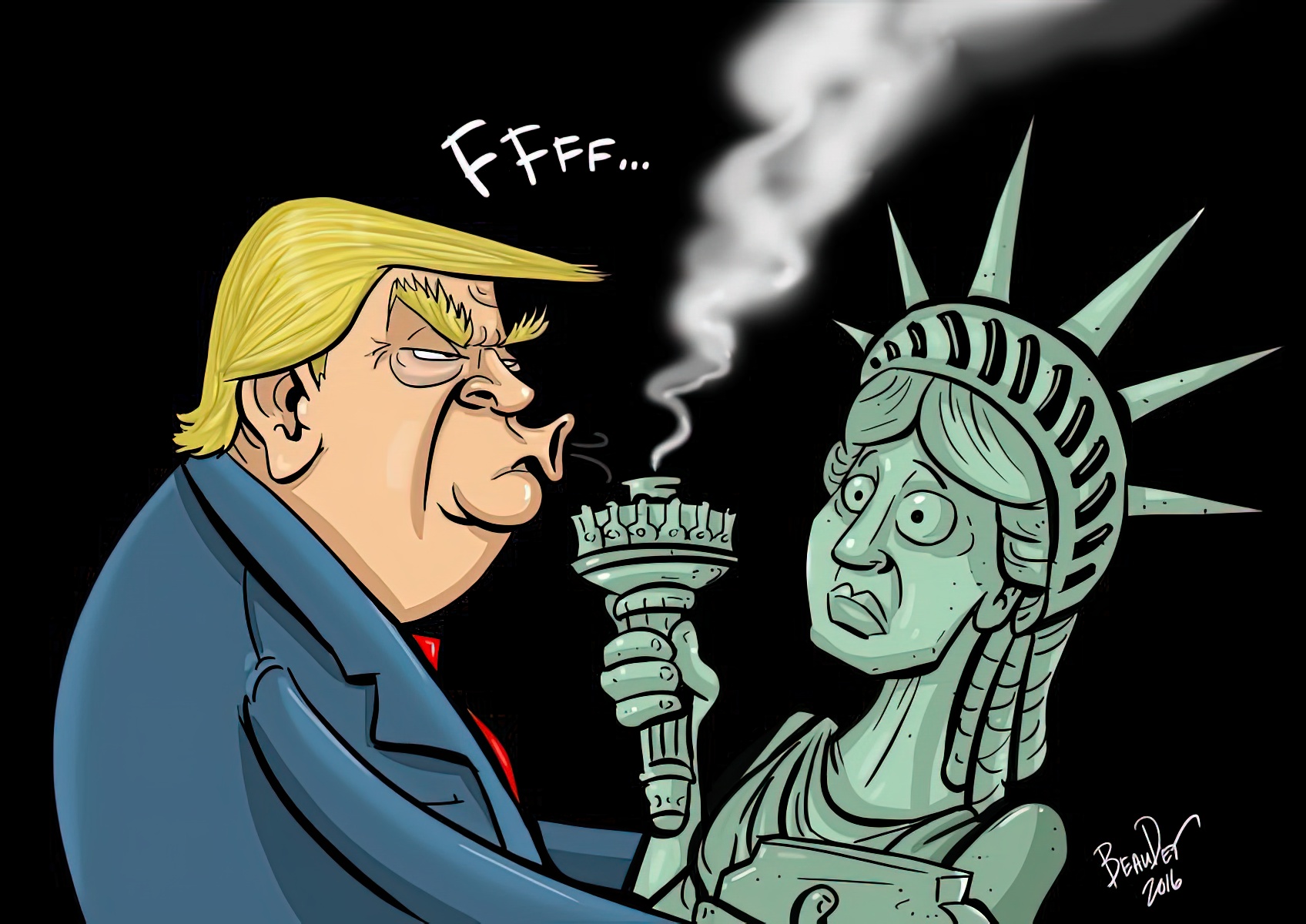
If there was any lingering doubt about the ideological project of Trumpism, recent revelations from within the EducationUSA programme should serve as a final wake-up call. Behind the bluster of ‘freedom’ and ‘fair competition’, the Trump administration orchestrated a deliberate and systemic effort to erase women, minorities, and underprivileged students from the American academic landscape. The very institutions that were supposed to foster equal opportunities were quietly being reshaped into strongholds of white, male privilege, with a deliberate purge of diversity from their ranks.
EducationUSA: The Trojan Horse of Academic Suppression
EducationUSA, an official programme under the State Department, is tasked with promoting American higher education to international students. But under Trump, it became an ideological filtering system, subtly rewriting its narrative to discourage applicants from backgrounds deemed ‘undesirable’ by the administration’s standards. The goal? To reinforce a conservative, nationalist vision of academia—one that harks back to the days when elite universities were little more than private clubs for wealthy white men.
Internal documents reveal a targeted suppression of diversity-focused scholarships and outreach programmes. Guidance to recruiters subtly shifted away from encouraging applications from women in STEM, historically Black colleges, and first-generation students. Instead, resources were increasingly directed toward demographics that aligned with the administration’s conservative base: wealthy foreign nationals and American students from traditional backgrounds.
The Erasure of Marginalised Voices
Under Trump, academic institutions faced mounting pressure to abandon diversity initiatives. Federal funding for programmes that aimed to empower underrepresented groups came under scrutiny, often slashed or restructured under the guise of ‘meritocracy’. The administration sought to undo years of progress by labelling affirmative action as ‘discriminatory’, a deeply ironic and perverse reversal of reality.
Women in academia were not spared either. Policies designed to support female academics, particularly in male-dominated fields, were quietly sidelined. Grants and research funding saw a shift in priority, mirroring the broader Republican agenda of reinforcing traditional gender roles.
At the heart of this movement was a cultural war disguised as policy reform—a drive to restore the patriarchal, white-dominated status quo of American higher education.
The Wider Implications: A Trumpist Legacy in Academia
The impact of these policies extends far beyond Trump’s tenure. The slow dismantling of diversity programmes means that fewer marginalised students have access to quality education, fewer minority academics receive funding, and fewer institutions champion inclusivity. This isn’t just a temporary setback—it’s a calculated regression designed to leave long-term scars on the American education system.
Despite Trump’s departure from office, the ideological groundwork laid by his administration remains a looming threat. Conservative think tanks and political operatives continue to push these exclusionary policies, embedding them within the broader right-wing agenda. The next Republican administration—whether helmed by Trump or his successors—will have a ready-made blueprint for further marginalisation.
Fighting Back Against the Whitewashing of Academia
The resistance to this ideological cleansing must be as fierce as the attack itself. Universities must double down on their commitment to inclusivity, refusing to bow to political pressure. The academic community must continue exposing and challenging these policies, ensuring that education remains a vehicle for social mobility rather than a tool of gatekeeping for the privileged few.
Trump’s war on diversity in academia may not be making front-page headlines, but its effects are insidious and lasting. The question remains: will we allow higher education to be hijacked by reactionary politics, or will we reclaim it as a space for all?
One thing is certain—if we fail to fight back, we risk losing generations of talent to an ideology that thrives on exclusion…
G.S.
Actualizado el 24 de noviembre de 2025